
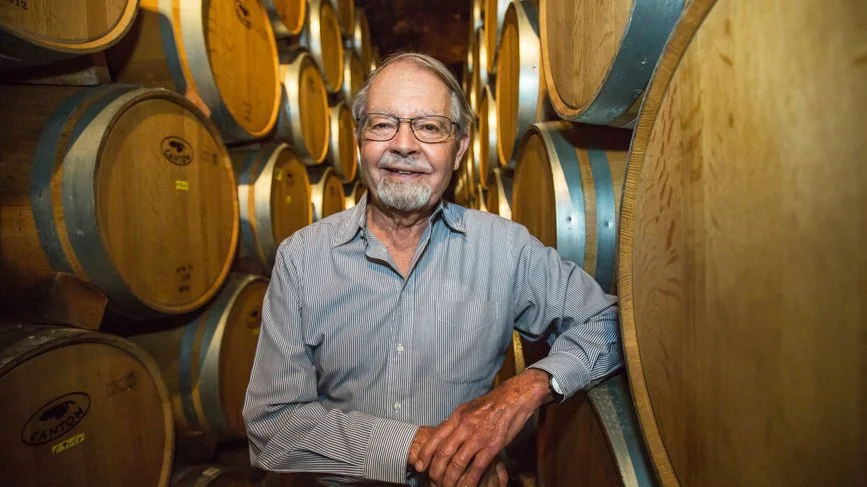
Elin McCoy in conversation with Paul Draper of Ridge Vineyards

Episode Summary:-
Paul Draper of Ridge Vineyards is one of the world’s greatest wine names. Now 90 years old, he talks with Elin McCoy about his remarkable life. Here, in Part I, he tells how he grew up in the American Midwest, with a family who were indifferent to wine. He first became interested in wine when, as a teenager, a friend’s Swiss parents introduced him to the joys of Burgundy and the Rhône when he spent weekends with them in New York. Immediately, he knew wine was his calling.
He decided UC Davis was not for him, as so much of the curriculum was based on chemistry, a subject he wrestled with. He enlisted in the US Army, went to its language school, and was then posted to northern Italy, where he worked in intelligence, especially liaising with the locals. (During the Cold War, the US government was concerned that Stalin might invade and sweep down through Yugoslavia.) While there, he immersed himself in the food and wine scene, making friends with winemakers and enjoying wine in the restaurants with his new friends. After Italy, he headed to the Sorbonne in Paris to improve his French and continued discovering great wines. A posting to New York to work with diplomats came with a generous allowance for hospitality, which he took full advantage of when it came to enjoying New York restaurants’ wine lists.
An invitation from Fritz Maytag, a great friend at Stanford University, to join him in starting a foundation in Chile led to his next adventure. While they were setting up the foundation, they explored what they could do economically for Chile and turned to the idea of supporting Chile’s wineries on the international market – back then, only two percent of Chile’s wines were exported.
He also started making wine himself, leasing an old bodega and using grapes from old Cabernet vines. He took guidance from classic winemaking books, such as those by Emile Peynaud, Pascal Ribereau-Gayon and others, including several from the 19th century. Paul admits that they were not eventually successful in persuading Chilean wineries to export right then, but they at least started exporting his wine.
He also discusses how he began – the UC Davis method taught winemakers to make wine without taking into account how good the grapes originally were, a legacy of Prohibition in the US, so techniques were applied which he believed were unnecessary. He relates how two wines convinced him that California could make wine to stand alongside Bordeaux’s First Growths: La Questa from the Santa Cruz mountains, and Inglenook in Napa, both of which had the capacity to age beautifully.
“My education, I like to say, in fine wine really began with my ability after college to set aside a few bottles of First Growths,” Paul confesses. (He could buy ten-to-fifteen-year-old First Growths for US$35, he notes.) Joining a group of friends who loved wine and had monthly lunches opening the finest bottles developed his knowledge of fine wine further.
He left Chile due to an unfavourable change of government, and was introduced to David Bennion, who with a group of colleagues from Stanford Institute of Research, had bought a ramshackle property in the Santa Cruz mountains. David decided to make a half-barrel of wine using old traditional methods, and had asked Paul and Fritz Maytag to talk to him about their winemaking in Chile. Paul could see they were in tune, and much to many people’s amazement in 1969, was offered the role of winemaker at Ridge. He was impressed with the limestone soil, which reminded him of Bordeaux and the climat. Here, he said back then, I can make fine wine.
““I saw for the first time several wines from Inglenook that, like the La Questa, were of the quality of First Growth Bordeaux and realised I could do this.” - Paul Draper”
RELATED POSTS

Keep up with our adventures in wine
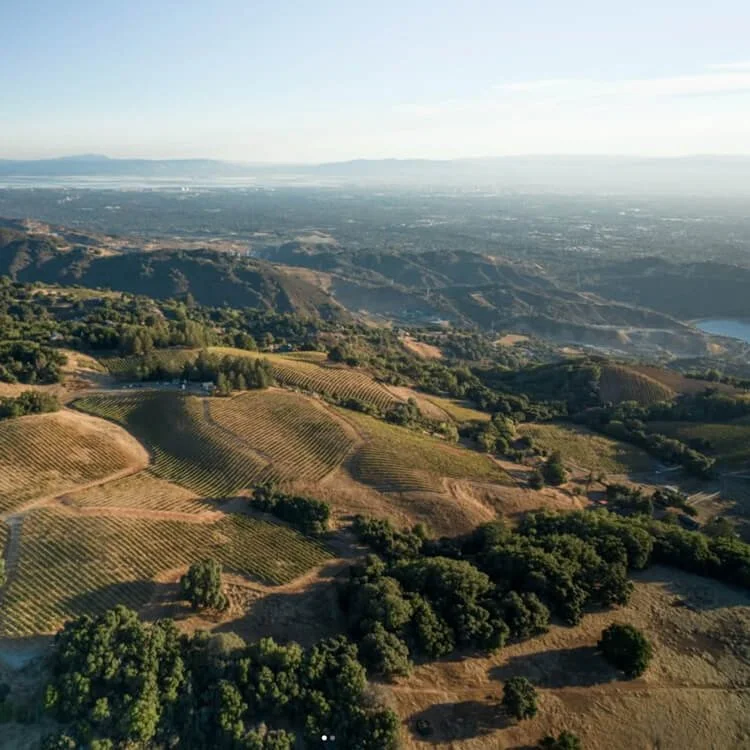
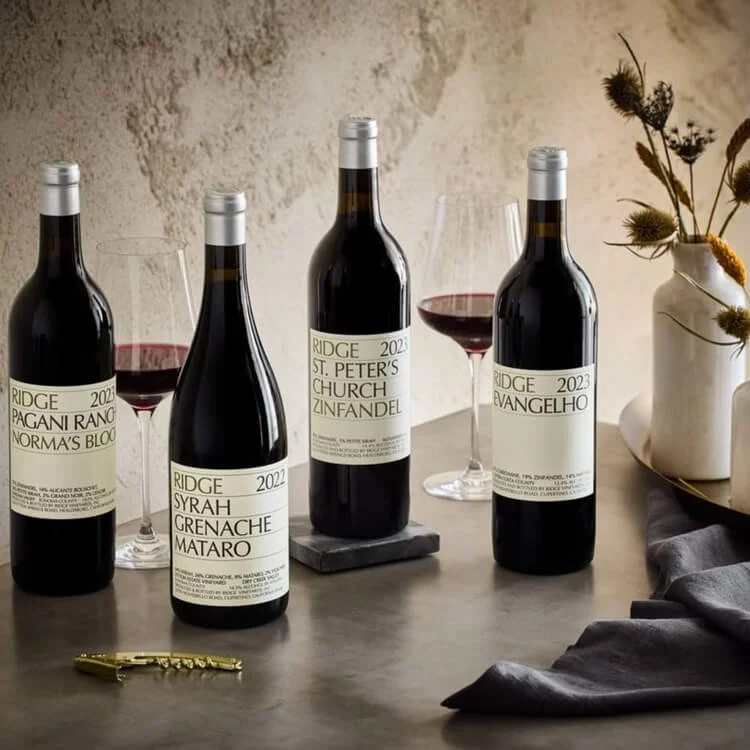
Paul Drtaper of Ridge Vineyards - one of the world’s greatest wine names.