
▻ The Story of the Judgement of Paris – Part IV
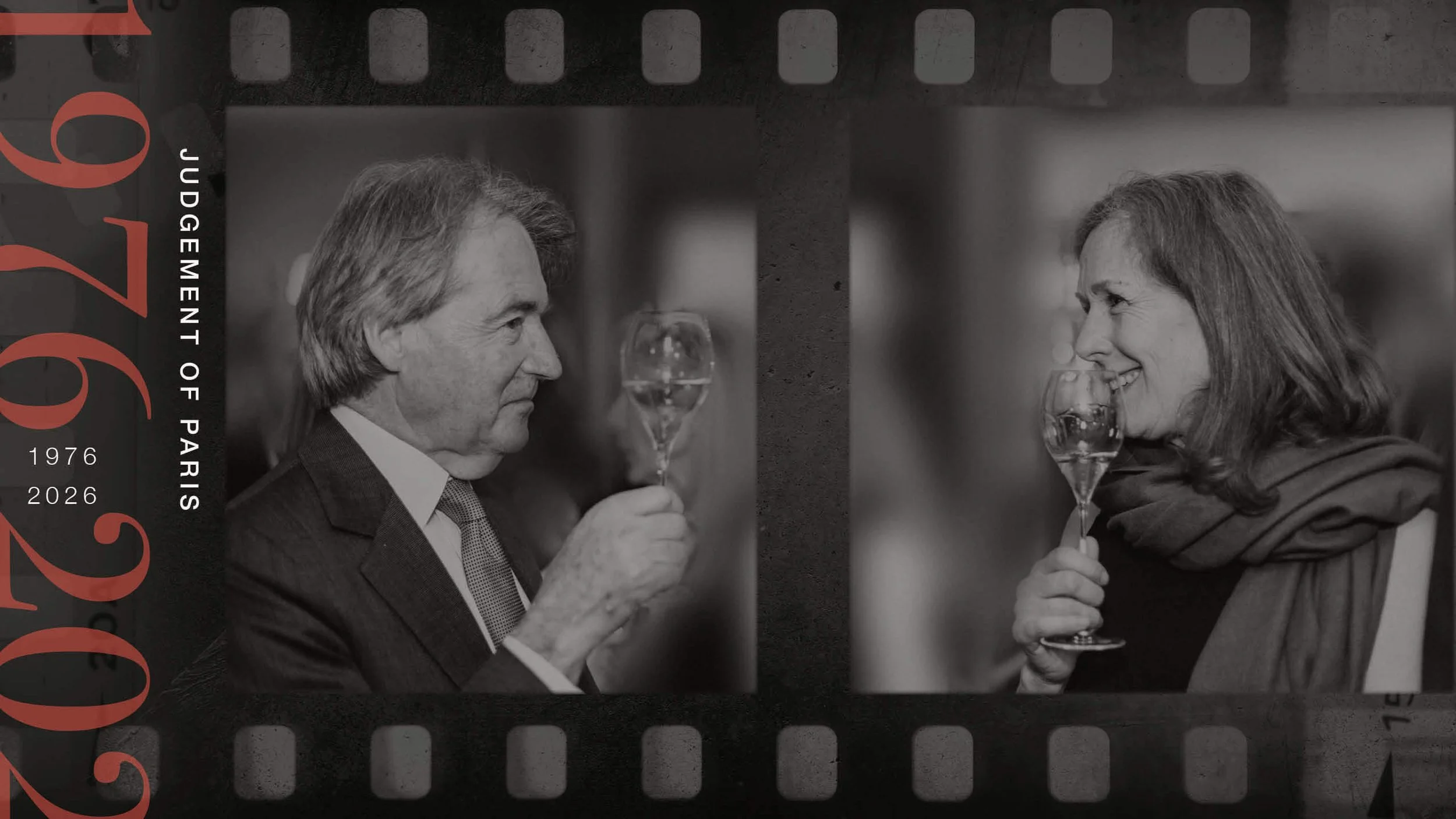
Hosted by Sarah Kemp and John Stimpfig

Episode Summary:-
In the final episode of our account of The Story of the Judgement of Paris, we pick up the story of how George Taber’s article in Time magazine became the catalyst for a revolution in the wine world. Brian St Pierre, who was the Media Director of Wine Institute (now the Wine Institute of California), explains how, when he heard the news, he realised that this was a story that needed to be broadcast further. He contacted Frank Prial of the New York Times, who was initially sceptical, but after he was aware of the biographies of the expert French tasters and an account of the tasting, he wrote two articles, one on the reds and one on the whites. Prial’s columns were syndicated in newspapers across America – the touchpaper had been lit.
California wines had little presence on the East Coast, aside from generic, mass-produced wine and a few historic properties. Bo Barrett of Chateau Montelena recalls how once the news was out about their Chardonnay winning the top placement in Paris, East Coast retailers started to call. They decided to increase the price of their wine from US$4.75 to $6.00, and were accused of price gouging.
In France, Hervé Berland, who arrived at Château Mouton Rothschild in 1977, and went on to become its Managing Director, relates that though the French trade weren’t happy, it did open the eyes of some châteaux owners, and actually kick-started a renewed focus on quality. So what was originally seen as negative was, in fact, a positive development, and heralded a new era of quality awareness in Bordeaux, as well as California and emerging wine regions in other parts of America (North and South) and other European regions.
Patricia Gallagher believes the recognition of California wine would have come eventually, as the quality was there. She recollects how Steven was a brilliant taster, “open-minded to wines, honest, able to go into great detail… he was a very, very honest man. I wish everyone had been as honest to him as he was to them.”
After Steven sold his shop, Cave de La Madelaine, he returned to Britain, and Sarah Kemp describes how she appointed him as Consultant Editor at Decanter magazine, and how they worked together for three decades. While Steven is best known for the Judgement of Paris, he was also involved in many other enterprises, including founding the Academie du Vin library, authoring books, working with the Wine & Spirit Education Trust, Chairing the Decanter World Wine Awards, and founding Bride Valley Vineyards in Dorset.
Sarah Kemp asks his wife Bella how he felt in the end about the Judgement of Paris. “He’d have liked to have moved on, but he was very, very happy to be acknowledged,” she relates… “I don’t think he wanted it to be the one thing he was ever remembered for, but he was very proud of it.”
The final words in our series are spoken by Steven. “Wine is a way of life. As I said at the end of George Taber’s book, wine has given me more than I could possibly have imagined… I mean, it’s a community. Wine to me is the three ‘Ps.’ I always say: it is the place, which is normally very beautiful or interesting, the people, who are normally very good – and if they’re bad, they’ll make bad wine. And therefore, it’s a product. So you put the three ‘Ps’ together, and you have an ensemble.”
““Wine is a way of life, wine has given me more than I could possibly have imagined.” – Steven Spurrier”

Peter Sisseck, the man who helped change the image of Spanish wine, talks to Sarah Kemp.