
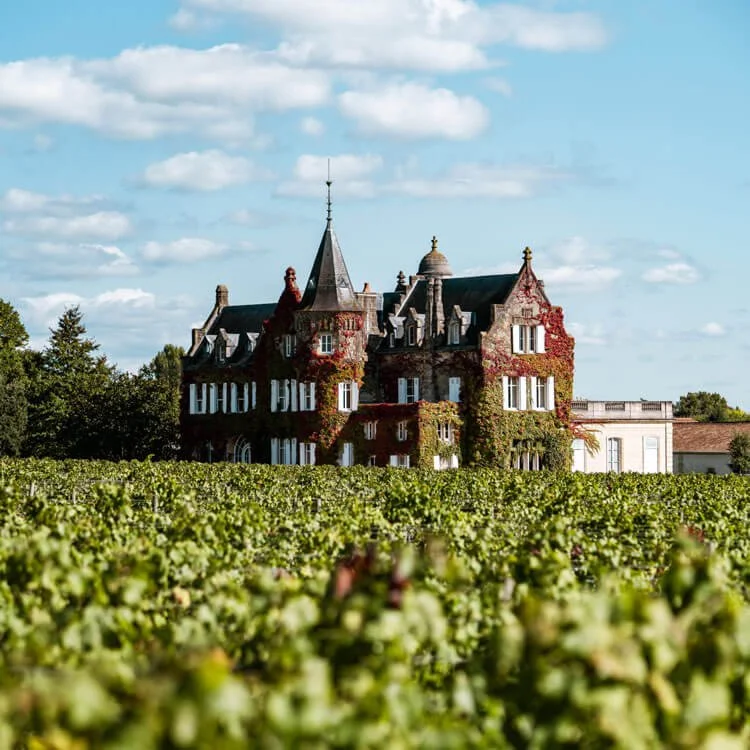
✒ Château Lascombes
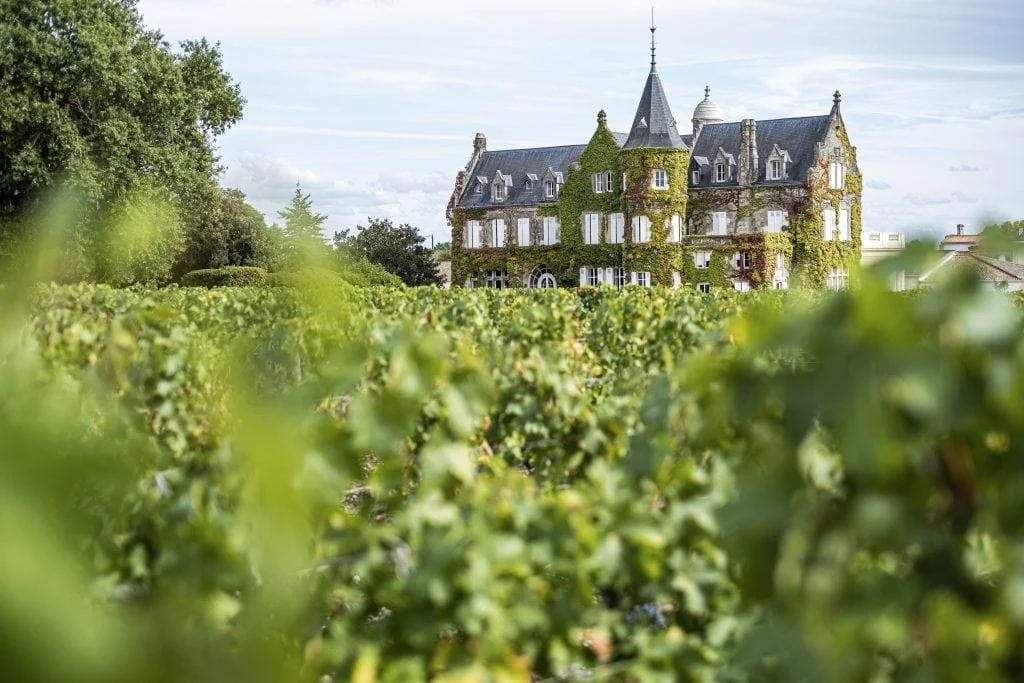
by John Stimpfig
Two years ago, Axel Heinz unexpectedly left Ornellaia in Tuscany to return to Bordeaux to chart a much-needed renaissance at Chateau Lascombes. Last month, Heinz hosted a lunch at London’s Michelin-starred Trivet restaurant to showcase the estate’s new winemaking direction. John Stimpfig went along.
In 2018, the US farming magnate, Gaylon Lawrence Jnr, grabbed the headlines when he bought Heitz Cellar, unquestionably one of Napa’s greatest names. And that was just the start of a burgeoning fine wine empire. Since then, Lawrence has bought several other well-known wineries in the Golden State, including Haynes Vineyard, Burgess Cellars, Ink Grade and Stony Hill.
Then, in 2022, the acquisition trail led him beyond Northern California to the old world vineyards of Bordeaux and, specifically, Château Lascombes, the Margaux 2nd growth, which he snapped up for an undisclosed sum. It looked like a bold and potentially brilliant move. Many in the wine world felt that Lascombes had underperformed in recent times – especially considering its long history as well as the estate’s substantial and impressive vineyard holdings.
Lawrence clearly felt that he needed a big name to lead it. So it was yet another coup when he announced, in 2023, that he had secured the services of the highly accomplished Axel Heinz. For the best part of two decades, Heinz had been taking Ornellaia and Masseto in Bolgheri to ever greater heights in Bolgheri. Fortunately, it just so happened that Heinz was sufficiently tempted by this new challenge and liked the idea of returning to Bordeaux – where he began his career in consulting, followed by running La Dominique.
Although vines were first planted at Lascombes in the 12th century, the estate didn’t take shape until much later and took its name from the seventeenth-century owner Antoine Chevalier de Lascombes. In the last century, it belonged to the Ginestet family and during World War 2, the chateau was covertly used by the French Resistance against the German occupation.
In 1952, the renowned Alexis Lichine purchased it with a group of investors, including the US investment banker David Rockefeller. Under Lichine, Lascombes’ cellars and vineyards got a shot of much-needed investment after wartime neglect and economic privations. But then came a succession of corporate proprietors. In 1971, it was sold to the UK brewers Bass Charrington, which also owned Latour at that time. In 2001, it was bought by the US-based Colony Capital which then sold it to the French Insurance company MASCF which put it up for sale in 2022. Regrettably, some bad decisions were made during its time under its corporate tenures and its reputation had slipped.
Now though, it is back in private ownership. Moreover, its owner has deep pockets as well as big plans to reposition the estate and restore its reputation. In particular, he fully intends to make the best wine possible with Heinz at the helm. So the big question is, two years on since his return to Margaux, how is the new Lascombes team getting on?
On the strength of this tasting, I have to say Heinz and his technical director, Delphine Barboux, have made a lot of progress in short order. Arguably, the biggest change has been to increase the percentage of Cabernet Sauvignon in the Grand Vin blend at the expense of Merlot. During the course of recent decades, the blend had reached close 50:50. This reflected the ratio of what was planted in the vineyard. But it wasn’t a blend that showcased the best of the estate.
Heinz decided that he wanted to go back to a blend which was more representative of the estate’s most historic, 1855 vineyards. Critically, these vineyards are almost all on the property’s high gravel terraces which give the best sites for Cabernet. As a result, the Grand Vin blend is now more like 60% Cabernet and 30-35% Merlot with 5% Petit Verdot and Cabernet Franc. Inevitably, volume has been sacrificed. But tasting the 2022 and the 2023, it is clear that the more sophisticated style and greater quality have been the beneficiaries.
The winemaking has also been tweaked. Heinz is looking for more transparency as well as better vineyard expression. He wants to see more elegance, subtlety and purity in the wines and ‘less heavy-handed winemaking interventions’. As of 2023, his first full vintage in charge, there has been a marked shift to cooler fermentations, shorter extractions, more careful elevage including less new oak and more use of amphorae. A new vat room has also provided greater control and more precise plot fermentations.
Encouragingly, Heinz has been given the mandate to innovate in other areas. And he has taken full advantage with a bold move to launch a brand new wine – La Côte, a 100% Merlot, cherry-picked from a special 5 hectare plot close to the Gironde estuary which was planted in the 1980s. ‘It’s a very special lieu-dit for the variety, says Heinz. ‘Like many of the Médoc’s most famous plots La Côte overlooks the river. What makes it even more special is that it’s clay limestone soil contains veins of blue clay which is a geological gift for the expression of Merlot.’
The decision was made to vinify this separately beginning with the 2022 vintage. ‘We really wanted to show something new, exciting and coherent that also says this is where Lascombes sees itself in the future’. With such a small plot, quantities for La Côte are miniscule – with a maximum of 30,000 bottles per vintage. The price, in contrast, is distinctly punchy. Lascombes are pitching it at around £140 per bottle in bond. That’s around three times the price of the Grand Vin, making the latter look a relative steal. And perhaps that is partly the point. It now gives Lascombes greater cover to raise the price of its comparatively under-priced ‘First’ wine.
Comparisons with the Masseto are inevitable. On the strength of this one tasting, the two wines seem quite different to me. Perhaps La Côte will take on a similar life and market trajectory to Masseto. However, I personally think it is unlikely because the fine wine world is in a very different time and place to when Masseto burst onto the scene back in the late 1980s. Of course, only time will tell.
Nonetheless, there’s no question that Heinz has made a good start. He’s also clearly very happy to be back in Bordeaux and to be taking on such an interesting challenge. I should also add that Trivet provided a fabulous lunch to accompany the wines.
Wine Notes:-
Château Lascombes 2023
This is Axel Heinz’s first Grand Vin vintage with complete control over the harvest and winemaking. So it shows the full stylistic direction of travel. Very fine lift and aromatics on the nose with a lovely floral character. The palate is also fresher, lighter and more focused than the 2022 with vibrantly fresh acidity and ultra-refined, lacy tannins. Sweet cassis, perfumed violets and fruit pastille flavours combine with graphite and mineral nuances. Mid-weight in structure, this comes across as very Margaux in style – elegant, complex and precise with an excellent dry, savoury finish. Though very young, this could be opened and enjoyed in a couple of years’ time and then for many years to come. The blend is 60% Cabernet Sauvignon, 37% Merlot and 3% Cabernet Franc and Petit Verdot. The winemaking saw a gentle vinification by infusion and a shorter maceration period. Overall yields were down to 35hl/ha (from 45 hl/ha) and elevage was in a mix of barrels, foudres and amphorae.
13.5%
Drink 2028-2060+
Château Lascombes 2022
Replete with the new Grand Vin label, the 2022 Lascombes was harvested and vinified by Delphine Barboux and Dominique Befve and then blended the following year under the direction of Axel Heinz – hence the greater percentage of Cabernet. In any event, it is an impressive wine from a very good vintage. Stunning perfume on the nose and deep colour. The palate provides sweet cassis and blueberry fruits with floral notes of violets alongside notes of slate and minerals. Bright acidity lush, fleshy tannins frame the mid-weight structure and give richness to the texture and mouthfeel. Good length and lots to enjoy. Still very young.
14%
Drink 2026-2060+
La Côte, Lascombes, Margaux 2022
This is the debut 100% Merlot from Lascombes dressed up in its elegantly minimalist label. The wine is made from a small group of rare parcels of Merlot vines that overlook the Gironde on clay limestone soils with veins of blue clay. Planted in the 1980s, these plots comprise a total of about 5ha, the best of which have gone into this wine. The grapes were harvested between the 8th and 13th of September and the winemaking included a maceration period of 25 to 30 days and an ageing period of up to 20 months in a mix of old and new oak barrels and amphorae. As for the wine, it is impressively delicious at this premature stage with bright acidity, juicy, tingling blue and red fruit (blueberries, violets, bramble as well as spice and graphite) together with plump, grainy tannins. It has balance, lift and vivacity and carries its 14.5% alcohol and subtle, well-hidden oak with consummate ease. Just 20,000 bottles made, La Côte is not released en primeur and is only sold on the Bordeaux Place as a bottled wine.
14.5%
Drink now to 2050+
RRP circa £140.00 per bottle
Château Lascombes 2016
Made under the previous regime of Estate Director Dominique Befve, this was the first Lascombes vintage by its newly promoted Technical Director Delphine Barboux, with the assistance of consultant Michel Rolland. Deep colour, with more-ish, rich ripe fruit balanced by juicy succulent acidity. Blue and black fruit flavours of primary cassis and dark cherry dominate at this early stage with cream, cedar and minerals in support. Ripe tannins and generous mouthfeel, this is plush with a sustained finish. Personally, I feel it needs another two or three years for its drinking window to open fully. A blend of 50% Cabernet Sauvignon, 47% Merlot and 3% Petit Verdot.
13.5%
Drink 2028-2055+
Château Lascombes 2010
From one of the great Bordeaux vintages, this is also still on the young side but is just starting to hit its stride with firm, dense tannins, bristling acidity and delicious primary fruit flavours of blackcurrant pastille, dark cherry, leather and minerals. Mid-weight with fine balance and good length, this is impressively good. Aged in a mix of barrels and foudres, the blend is 50% Cabernet Sauvignon, 47% Merlot and 3% Petit Verdot.
14%
Drink 2025-2055+
Château Lascombes 1985
Axel kindly also brought along a couple of library vintages to the lunch to show how well Lascombes can age. Poured from jeroboam, this classical 1985 showed good colour and a beautiful truffle bouquet. This is fully mature now and very much at its peak where it will remain for a good decade or so. Still some fine red currant and red cherry fruit together with tertiary flavours of truffle, sous-bois, mint, cedar and balsam. It remains fresh and balanced with supple, slightly drying tannins and light to mid-weight structure. Elegant, delicate and delicious with a fine savoury finish that is gently persistent.
12.5%
Drink now to 2040
Château Lascombes 1970
The 1970, a good vintage from a very different winemaking era, showed some good colour for its age with good depth of brick at its core. The nose is fully mature as is the impressive palate offering some delicately sweet pale red fruits and cedar on the attack that give way to undergrowth, tree bark, mushroom and balsam. Light and fresh, with lattice-like tannin this is a little drying but still has good life in it and lots of pleasure for fans of mature, well-aged claret.
12.0%
Drink now to 2035

Gaia Gaja was in town to celebrate the 30th anniversary of Ca’Marcanda, the family’s Bolgheri estate.