✒ The Latest Wine Books
Recent Book Round Up
A few years ago, as usual over a glass of wine, (and, as usual, offered casually but with a pleasant aspect of sharing and discovery), Steven Spurrier interrupted our reminiscences of good times at his wine shop and restaurant in Paris in the 1970s to mention that he’d been thinking of establishing a library. He had a way of being casual about serious things, engaging but sometimes confusing, and this was briefly one of those, though he quickly clarified that he wasn’t imagining a building, but a collection of books on wine: More sharing, more discoveries, more pleasure: typical Steven. (Back in Paris, he’d established a tasting counter next to the shop, well-organized but informal, a place to relax and learn about wine in an amiable, unforced, and certainly not pedantic, way: he called it L’Academie du Vin, as it blossomed into a more organized wine-tasting program.)
And it came to pass, a worthy legacy, ongoing and burgeoning; the resulting Academie du Vin library of anthologies and singular books, well-written narrative-driven celebrations of regions and their wines. Recently, they acquired the array of oversized paperbacks focused tightly on various wine regions originally published by Infinite Ideas Ltd., also well-written narratives, many recently updated, useful companions on the road or simply in a wine shop. Here are three new volumes in that line, recently released and quite worthwhile.
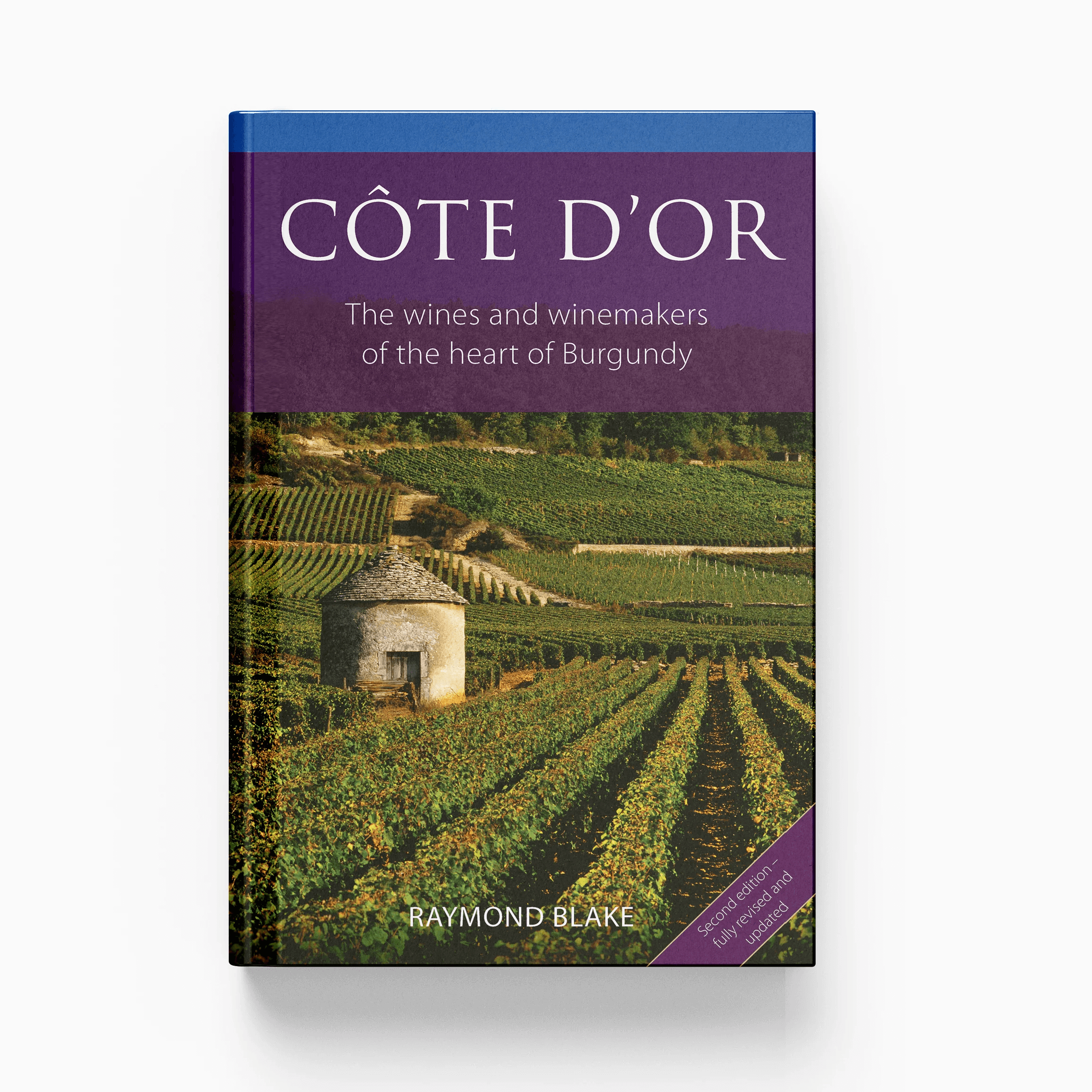
Irish author and journalist Raymond Blake’s “Cote d’Or” is subtitled “wines and winemakers of the heart of Burgundy,” but ranges further through the evolution of the territory he celebrates as embodying “a merry-go-round of flavours... refusing to be pinned down by anything so prosaic as a tasting note.”
He begins with an amiable ramble through the region’s history which puts that magic mosaic of hilly vineyard plots in a coherent context, despite its odd progression from meddlesome aristocrats to a succession of monks not always devoted to “fastidious purpose,” and on to the fragmentation of Revolution, Napoleon, and the mysterious scourge of phylloxera (one early “remedy” was burying live toads in the vineyards) – a convocation of “destructive parents.”
There may be modern problem, he notes: “The concept of terroir may now be at the point where it is too sanctified, accorded too much unquestioning belief, preached with too much zeal.” One corrective is common sense, here arrayed through an eloquent overview of today’s vineyards, winemaking, villages and producers offering “enduring fascination for wine lovers, frequently leavened with helpless frustration.” Despite the challenges, he concludes with numerous suggestions for “enjoying burgundy.” With this guide, you will too.
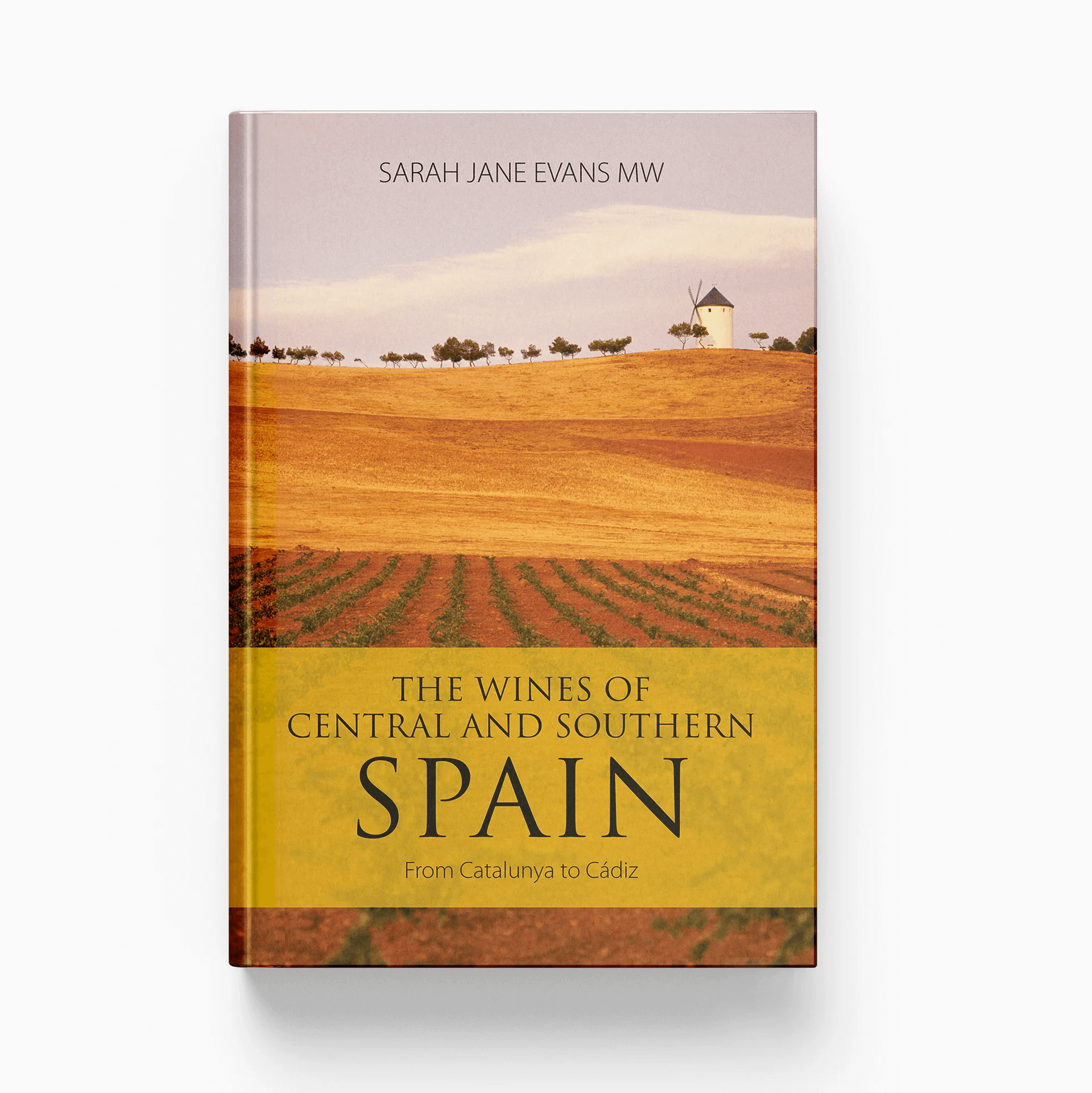
Sarah Jane Evans MW begins “The Wines of Central and Southern Spain” with a claim, a clarification, and a bracing dose of unfortunate reality. The claim? “Spain is the most exciting country in Europe for wine.” The clarification? This was also the first line of her previous book, on the wines of northern Spain; she stands by both. The unfortunate reality? “Brexit, for the UK wine trade, has been damaging.” That political stumble obstructs consumers as well, many of us bypassed by a generation of imaginative, energetic small producers deterred by red tape, bureaucracy, and misguided chauvinism.
This volume covers a lot of territory, on the Mediterranean side of Spain, away from the better-known northern regions oriented toward the Atlantic Ocean; here we range from Barcelona down to Cadiz, areas where cava and sherry have been energetically evolving recently, under the direction of a younger generation, from the “yeastie boys” of Jerez and their exciting, muscular table wines, to the reorganized standards of regions and categories beginning to create a pyramid of sparkling quality (the top tier goes to a few EU countries, America, and Asia – your local supermarket in the UK will only carry the slightly improved versions). The islands, the Balearics – more than party beaches, it turns out – and Canaries, are also included: more surprises await.
It's a series of interesting tales, unravelling many of the myriad complications of territory and terrain, unfamiliar grape varieties and nomenclature, some quirky history and self-inflicted crises, and novelties and nuances of language arranged in as orderly a fashion anything about Spain can be, never easy but worth the effort. In Evans, it’s found an ardent but sensible and eloquent translator and guide for a journey well worth taking.
And then there is the relatively new kid on the block: California, some parts of which being a state of mind as much as anything else, a fact that rarely comes up in wine discourse, but rightly celebrated as the place which “revels in discovery” in “The Wines of California,” still the odd, exuberant always-on-the-move place it was and remains: “The gold rush, Hollywood, Disneyland, Silicon Valley, Tesla. . .” notes Elaine Chukan Brown, author and journalist; (as a former San Franciscan, I’d add earthquakes, multiculturalism, and cantankerousness, at a minimum). More than other wine regions in the so-called New World, she writes, imported European cultivars became “not merely derivations of their original homeland, but novel and satisfying expressions that reveal new possibilities in wine.”
Argue with that statement if you wish, but the wide-ranging journey here reinforces the point, partly by putting the almost obsessive focus by many outsiders on Cabernet Sauvignon, in perspective – there’s a lot more than that going on, and the author is a relentless pursuer.
Given the state of the wine industry over the last few years, California’s something of a moving target, but she avoids some pitfalls, moving briskly through its history, of literal and figurative missionaries from the earliest days through Prohibition, on to a somewhat haphazard rejuvenation, in a well-focused account. The heart of the book, though, is emphatically about California wine and winemaking now, and how it’s looking good.
That’s a lot to cover, admittedly, but she knows the territory, and the new generation making it work, and presents it in a firsthand way, straightforwardly: The heart of the book is an array of concise winery profiles arranged in six regions accompanied by basic but useful maps, information on grape varieties, appellations, and just enough notable people and history to put each region in context, amiable and superbly readable. (The geeky stuff, on appellations. labelling, sustainability and American Viticultural Appellations, is in a series of appendixes that end the book.)
There’s a lot of hand-wringing and conflict going on about the presentation and marketing of wine these days, but these three superb volumes at least demonstrate that there’s no shortage of superb material for any optimist to begin with, still in good hands, hearts and minds. Cheers!
Brian St Pierre
RELATED POSTS
Keep up with our adventures in wine
Jancis Robinson MW talks to Elin McCoy about the 9th edition of The World Atlas of Wine which is about to hit the shelves.