
▻ The Connoisseur Week’s Greatest Vintages
With Sarah Kemp & Jane Anson

Episode Summary:-
Sarah Kemp and Jane Anson have just returned from hosting their fifth Connoisseur Week in Bordeaux, where they and ten guests spent a week immersing themselves in the greatness of the Bordeaux region. In this episode, they discuss the extraordinary producers they visited and the wines they tasted, including Château Ausone 1945, Château Pichon Comtesse 1982, Château Cos d’Estournel 2000, a bevy of extraordinary 1989 vintages, including Vieux Château Certan, Rauzan Segla, Léoville Poyferé, Gruard Larose and Clos Fourtet.
They discuss how the 2010s and 2005s are drinking, and also why they believe that 1989 is probably the most consistent vintage, in its sweet spot at the moment. They describe their visits to châteaux Cos d’Estournel, Pichon Longueville Comtesse de Lalande, Rauzan-Ségla, Margaux, Vieux Château Certan, Angelus, and the magnificent birthday vintage lunch with François Janoueix at Château Condat with vintages ranging from 1979 to 1947. Jane and Sarah explain why they decided to host the first welcome dinner featuring magnums of mature St Julien, and the memorable final dinner, with surprise magnums of legendary wines.
““It is the best party in Bordeaux.” – Jane Anson”
To read a full report of the trip, see below.
For full tasting notes, go to www.janeanson.com
If you are interested in attending a future Connoisseur Week and wish to be put on the waiting list, email hello@janeanson.com. Connoisseur Weeks are limited to ten guests. The 2027 Bordeaux Connoisseur Week is already sold out. However, tickets for The Connoisseur Week Tuscany 2027 will be released shortly.
Connoisseur Week 2026 – The Ultimate Bordeaux Party
by Sarah Kemp
If Burgundy lovers are hedonists, are Bordeaux lovers romantics? That was a question which entered my thoughts several times during this year’s recent Bordeaux Connoisseur Week. I believe the answer is “yes.” Maybe it’s the ability of Bordeaux to age with such grace over many decades; vintages, of course, provoke memories, which also evolve, sometimes in unexpected ways. How can you not think of what was happening to the families left behind in the vineyards when the 1945 was bottled, or feel nostalgia for 1989 (kicking off the Jilly Cooper years of unrestricted fun, blue eyeshadow, big shoulder pads and totally unsuitable boyfriends), or 2016, one of Bordeaux’s greatest vintages, taking place in the shadow of the Brexit referendum? We enjoyed wines from all those vintages during the week. The memories? Well, each year speaks to a wine lover in a very personal way and this year’s Connoisseur Week was an evocative trove from the past and a treasure chest full of newly evolved ones – as it should be.
It’s hard to believe that Jane Anson and I came up with the idea of The Connoisseur Week only five years ago; the plan was to take ten Bordeaux lovers to our favourite estates to further their appreciation and knowledge of a region we both love. It has provided us both (and of course our guests) with much happiness. This year, we hosted our welcome dinner at Chateau Beychevelle, which also provided us with a luxurious base for the first three days of our trip. After a couple of glasses on the terrace of Pol Roger Cuvée Sir Winston Churchill 2015 served with Neuvic signature Beluga caviar, we retired to Beychevelle’s wood-panelled dining room for the St Julien magnum-themed dinner.
We sourced all but one of the magnums directly from the châteaux. Château Léoville Las Cases 2010, Château, Léoville Barton 2005, Château Beychevelle 1995, Château Léoville Poyferré 1989, Château Gruard Larose 1989. The first two wines were both magnificent but still with years ahead, the 1995 Beychevelle was pure St Julien elegance, but the wine of the night was the Léoville Poyferré, everything you want from a mature claret: sous bois, leather, truffles, density of fruit, wonderful lift and texture, a dream of a wine. I felt sorry for the Gruard Larose which was superb, only slightly overshadowed by the Poyferré. Both the 1989s lingered long in the memory and set the benchmark for the week to come.
Our first château visit was to Cos d’Estournel, where we were hosted by its Technical Director, Dominique Arangoïts, in Michel Reybier’s private dining room. First up was Cos d’Estournel Blanc 2020 in magnum, highly perfumed nose, very inviting, a palate of delicious citric and peach fruit, waxiness of Semillon present, wet stone minerals, racing acidity, so many layers revealing themselves, a fabulous, nuanced wine to remind ourselves that Bordeaux also produces great white wine.
Then the 2015 Cos d’Estournel, with a firm core of dark berry fruit, liquorish, blackcurrant leaves, silky tannins, drinking well now but will go for years. The star, though, was the 2000 vintage with its extraordinary bouquet of musk roses leaping from the glass, one of those wines you just want to dab behind your ears, as it is hard to believe it isn’t a perfume. So many layers: cassis, dried herbs, peonies, liquorish, graphite, complex and beguiling. Still incredibly fresh and vibrant. Stunning.
After a rest (or for some of us a brisk walk down to the river), we headed to Château Pichon Longueville Comtesse de Lalande, which in Britain is often referred to as Pichon Lalande, though CEO Nicolas Glumineau prefers it being abbreviated to Pichon Comtesse; he is quite right – a wine of that elegance should be called Comtesse. I have a particular love of Pichon Comtesse, it was the very first case of vintage wine I ever bought. Nicolas pulled out all the stops that night. 2019 Pichon Comtesse Reserve, 2019 Pichon Comtesse, the Reserve in its element, bags of delicious blackcurrants, depth and concentration, very floral and moreish, the Grand Vin has an explosive richness, classic Pauillac notes of cigar box, graphite, spice, very long and moreish, vibrant and enticing. The 2018 Pichon Comtesse appeared broader when tasted next to the 2019, but still delivers.
Over dinner, Chàteau de Pez 2020, full of primary rich ripe blue and black fruit, very powerful and sumptuous, masses of energy, just the thing to get the palate going. Then the 2016 Reserve de la Comtesse and Pichon Comtesse 2016; the 2016 is one of my favourite vintages and so I had high hopes, which were surpassed. The Reserve would stand up to any Grand Vin: it is so complex, a flood of rich dense blackcurrants, black chocolate, fresh herbs, coffee, graphite, fine integrated tannins, while the Grand Vin steps up a level, which is hard to believe. 2016 Pichon Comtesse has everything. It is simply stunning, your palate is coated in rolling vibrant fruit, opulence, so savoury, a kaleidoscope of flavours, which come in wave after wave. A great, great wine. Then the classic 2010 vintage of Pichon Comtesse, everything still packed in, the most powerful expression of vintages of the night, and one which is going to be at it peak in a few years’ time.
The 2003 was a vintage I cannot forget. At Vinexpo, I left a lipstick on the dashboard of my car and came back to find it had melted in over 40 degrees heat. Most of the 2003s from that famously hot vintage have long gone, but Northern Medoc managed to produce some sumptuous fresh wines, Pichon Comtesse being one of them. It’s drinking beautifully now, remarkably fresh. Then we had surprise wines, served blind. One of our group nailed all but one of the vintages, while I recognised the 1996, as it is a vintage I love on the Left Bank. So classical and in its sweet spot right now. Then the 1986, in its prime, after taking years to come round, classic Comtesse, power and elegance. We finished with the legendary 1982 – with its sensual core of swirling blackberries layered with crushed roses, tobacco, so supple, so moreish, utterly complete and beautifully balanced, it will remain one of Bordeaux’s greatest wines for many decades to come.
Perhaps the surprise of the night was when Nicolas decided at the last moment to show the 2013, his first vintage at the estate, and famed for being the most difficult vintage for 40 years. While it did not live up to the other vintages, it still delivered much pleasure, almost as much pleasure as watching Nicolas’s face suffused with pride at providing a delicious wine against all the odds. Yet again, great terroir trumps vintage.
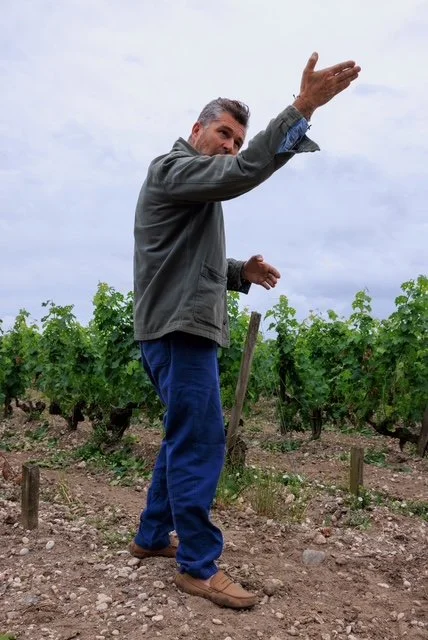
▴ Nicolas Audebert at Rauzan-Ségla
From the magic of one Nicolas to another. The next day was with Nicolas Audebert of Château Rauzan Segla. After a glass of my favourite Rosé, Domaine d’Ill, (alert, there is some news to come from the estate shortly), we dived into the 2019 Rauzan Segla, another great 2019 which displayed fresh ripe crunchy redcurrants and blackberries, wonderful density of fruit, silky tannins, masses of charm. The 2017 was sinuous, very elegant, suave with the 62% Cabernet in the blend providing the core of classic flavours, cassis, pencil, tobacco. Great saline lick on the finish.
2015 was particularly successful in the Margaux appellation, and Rauzan Segla displayed why, with its beautifully layered blue and black fruit, and lip-smacking streak of acidity. The 2009 displayed more opulence but still this hallmarked fresh acidity, lovely chocolate notes amongst the layers of blue and back fruit, satin tannins, wonderful grip and structure and ages to go. The two highlights, were the 1998 and 1982. The 1998 reminded me of Alice in Wonderland, diving deeper and deeper into tunnels of new flavours, a ride of a wine, and then the 1982, iconic, so much energy, so many layers of ripe fruit, sous bois, graphite, unctuous, and devastatingly beautiful.
There are many wine lovers who have taken their picture outside the gates of Chateau Margaux, probably the most hallowed such spot in the whole of Bordeaux. We were not unaware of our good fortune when the gates opened and we walked up the steps for dinner to the magnificent château, hosted by Alexis Leven Mentzelopoulos. First Growths are First Growths for a reason, and as we walked into the dining room, with the table laden with white orchids, and the finest linen and china, we all felt we had walked into a historic fairy tale. After a welcome glass of Krug, we enjoyed Pavillon Blanc du Château Margaux 2018 the white wine which started the quality wine revolution in Bordeaux (it made its debut in 1921), then Pavillon Rouge du Château Margaux 2010. Whilst many of the 2010 Grand Vins are still needing time, the Pavillon Rouge was more approachable. The 2010 Pavillon Rouge still had the powerful structure, which is a hallmark of the vintage, concentration of ripe blackcurrants, cigar box, fine tannins, long and very present but also generous and open.
Peony and violet aromas rose from the glass of the 2009 Château Margaux, gloriously opulent, with richness, exuberance, notes of black chocolate intermingling with pencil, and tobacco, the finest of silky tannins, fresh, complex and beguiling. The 1989 Château Margaux confirmed the reputation of this wonderful vintage, which is now in its prime. Extremely sensual, full of rich ripe black fruit with classic pencil and tobacco notes, wonderfully balanced and persistent, all held together by the finest of tannins – unforgettable. A final glass of Yquem 1983 rounded off a once- in-a-lifetime experience.
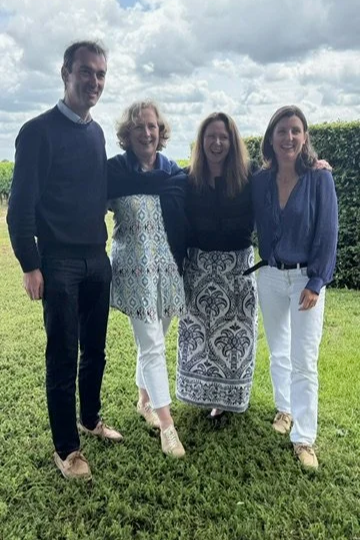
▴ Jane and I with Guillaume and Emma Thienpont at Vieux Château Certan
The next day, we went from the grandeur of Château Margaux to the elegant simplicity of Vieux Château Certan, where lunch was held under the trees next to the vineyard, the table a mass of pink flowers, looking as if it had come straight off the cover of a famous lifestyle magazine. Guillaume and Emma Thienpont were our charming hosts, and after a great explanation of the soil of this 14-hectare Pomerol estate, which is adjacent to Pétrus, Le Pin, La Conseillante and L’Evangile, we tasted the La Gravette de Certan 2020, which is made from younger vines. The label was started in 1986 and the 2020 wine showed bags of juicy blue and black berries, with a luscious, rich core that demanded another sip. A perfect introduction to serious Pomerol. Then a trio of stunning vintages, 2010, 2005 and 1989, accompanying a Côte de Boeuf and Meagre cooked on an open fire.
The 2012 showed an attractive austerity, cool blue fruits, lovely density, some balsamic notes giving a sweet and sour appeal, long and very moreish. The 2010 is opulent, with huge drive and power, purity of fruit, beautifully ripe tannins, an extraordinary wine with a trove full of flavours: cedar, chocolate, and complex layers of blue, black and red fruit. A classic. Then the 2005, with its floral aroma rising high out of the glass, beautifully balanced, the silkiest of tannins holding a deep core of rich black fruits in place; there is huge depth here, drinking beautifully, but years to go. Our final wine was 1989 (the theme of the week), 65% Merlot, 25% Cabernet Franc and 10% Merlot, light brown on the rim, the wine has mellowed into its tertiary phase. Sous-bois, leather, dried herbs, dried rose petals but still fresh and beguiling.
That evening we were some of the very first people to visit the new cellars at Château Angelus. The vats are suspended, and the effect is that it looks as much like an ultra-modern art gallery as a cellar. It will be put to use for the 2026 vintage. Technical Director Benjamin Laforet told us that it had been designed by Hubert de Boüard and his daughter Stephanie de Boüar-Rivoal, with input from him.
Over dinner we enjoyed the Grand Vin Blanc d’Angelus 2023, whose first vintage was in 2000. It comes in a super-stylish bottle. Though it has the appellation Vin de Pays, this is a serious wine, a blend of Chardonnay, Sauvignon Blanc and Chenin Blanc, remarkably fresh and balanced, with citric and white flower notes. The 2009 Angelus, 60% Merlot, 40% Cabernet Sauvignon, was an explosion of energy, beautiful density of rich blue and black fruit, quite racy and fresh with hints of mint. The 1988, a vintage which took a long time to come round, delivered burnished autumn flavours, sous-bois, milk chocolate, but still with that freshness. Very graceful and satisfying.
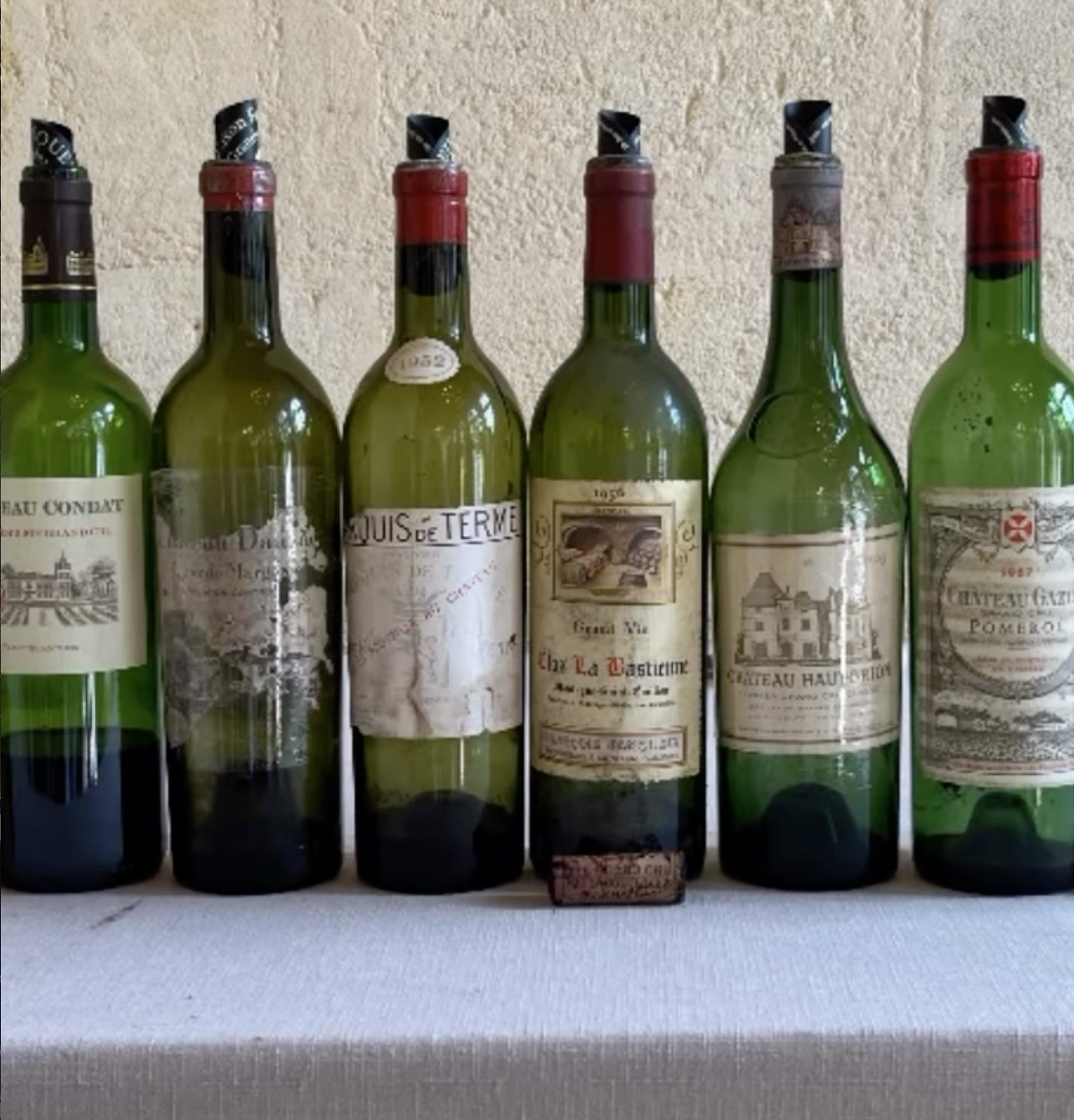
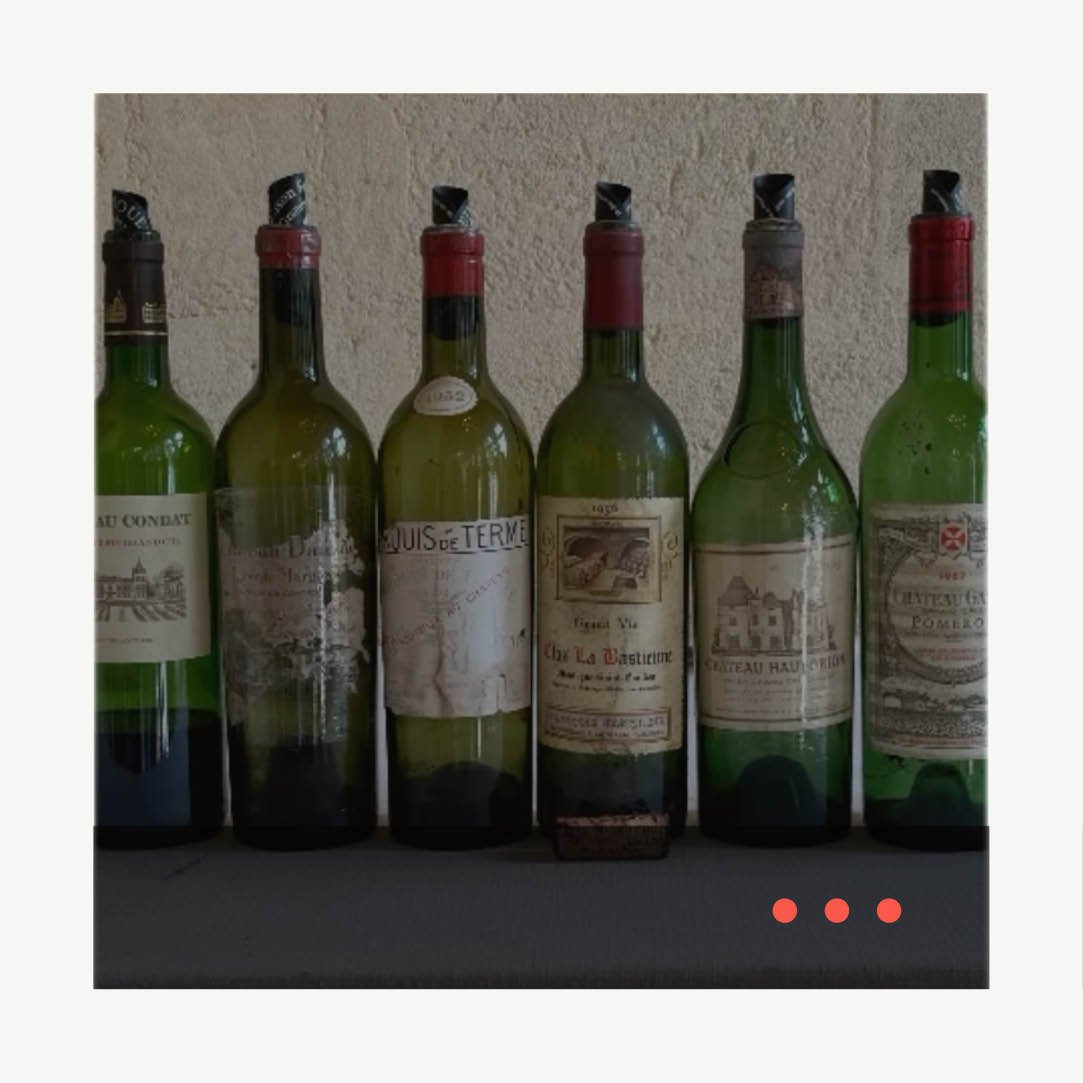
On our last day, we went to see one of Jane and my favourite people in Bordeaux, François Janoueix at his family estate Château Condat. We drank his dry white wine R de Romer, Château Romer and his Sauternes, Château Romer, on the banks of the Dordogne whilst eating oysters, which he had thoughtfully sourced from close to Omaha Beach, as it was D-Day. Like a magician, he produced a wine from the birth year of each of our guests, whose anniversaries ranged from 1979 to 1947. The standout for me was the 1952, Château Marquis de Terme, a vintage totally forgotten, not rated and rarely drunk. Light brown in colour, highly perfumed, a beautiful core of sous-bois autumn flavours, still present and very good length.
One of our wonderful guests had brought along a bottle of Château Ausone 1945, after reading that Jane had not tasted it at the legendary tasting of 1945s at Kensington Palace. Bought at auction, there was concern as the wine was at shoulder level. Before our final magnum-farewell party we opened it in a hushed room. Anxieties soon disappeared when the bouquet revealed faded rose petals, and then on the palate, whilst in its tertiary phase, a delicious ripple of autumnal fruit, still fresh, with a quiet power, a remarkable testament to the terroir of this great estate.
In a marquee amongst the vines at Troplong Mondot, magnums of great wines were consumed, amongst the sound of laughter, from a group which had bonded over the joy of great wine. Two wines stole the group’s hearts; Château Cheval Blanc 1998 and Château Clos Fourtet. It was a sweet moment when Jane and I realised they had both been made by the same man, Pierre Lurton. It only seemed fitting that we should raise a glass to him and all the producers of Bordeaux over the decades who have provided us with such unabashed pleasure, and a perfect end to The Connoisseur Week 2026.

Peter Sisseck, the man who helped change the image of Spanish wine, talks to Sarah Kemp.