▻ 20 years of Barons de Rothschild Champagne

In conversation with Philippe Sereys de Rothschild and Guillaume Leté

Episode Summary:-
For wine lovers the name Rothschild is associated with legendary Bordeaux, with one branch of the family owning Château Mouton Rothschild, another Château Lafite (both First Growths situated in Pauillac), and another Château Clarke in Listrac.
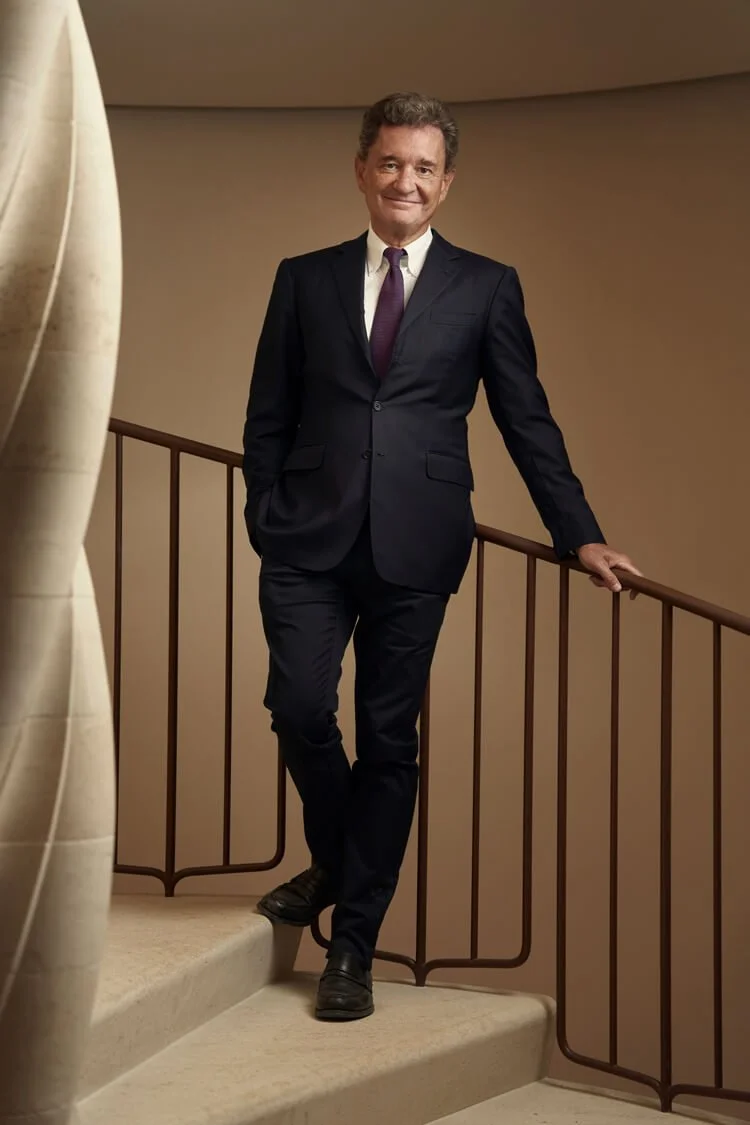
Twenty years ago, they decided to join forces to create a family champagne with their name on the label. Sarah Kemp speaks to Philippe Sereys de Rothschild, CEO of the legendary Château Mouton Rotschild, about how and why they came together to create a new Champagne House, and to Guillaume Leté, their cellar master, who started as an intern and has been integral to the great success of the Rothschild champagne, which is sold in the world’s finest restaurants.
Philippe reveals that there was not one particular family member who spearheaded the project, but all of them were interested in Champagne, and all had some connection. His grandfather, Baron Philippe de Rothschild, was a shareholder in Ruinart, and also created Baron Philippe de Rothschild Reserve, a small production of 2-3,000 bottles with Henriot. Philippe describes how the three branches of the family were very excited to work together, and starting a new Champagne House from scratch appealed to all of them. Sarah asks why they didn’t buy an existing House, as starting from scratch is always more difficult, especially in sourcing the best vineyards. Philippe explains that they have a history of starting from scratch, as in Opus One in California and Almaviva in Chile. “When we go to a new terroir, we really want to understand what this thing is about, because it really is a terroir Champagne”. Another incentive: “Everyone had told us that it was roughly impossible, so that was another reason to try and do it,” he laughs.
From the beginning they were sensitive to working with people from the region, and not bringing in “Bordeaux experts” Finding the right source of grapes they were told was “Mission Impossible”, Philippe remembers their response “Let’s go through Mission Impossible, much more amusing”. The style was clearly linked to wine, to terroir, and all we like in terroir - elegance, complexity, balance and depth”. He admits that at first it was difficult to source grapes “People didn’t know us, didn’t know if we were there for the long term, we were outsiders…they were cautious, I understand”. The family employed people from the region, and in a couple of years they built the trust which allowed them access to some of the best vineyards.
Chardonnay is the cornerstone of the House, and the Côte de Blancs is where they work with families, Even, their Rosé is Chardonnay dominated, with 94% percent Chardonnay and 6% Pinot Noir. They also source grapes from the Montagne de Reims. They also bought their own vineyards, and built two fabulous new facilities. Once the locals overcame their initial caution, they were welcomed. “They liked the idea of a family creating a family champagne, not another corporation”.
The family’s vision for the next 20 years is to continue to be recognised as one of the top-quality brands in Champagne. Once they had decided to put the Rothschild name on the label, there could be no other decision but a commitment to quality. Today, their champagne is sold in the Ritz and other top hotels and restaurants around the world.
Sarah asks if there are any differences in running a First Growth Bordeaux estate and a Champagne House. The answer is firmly “no”. Philippe explains that it is all about attention to detail, discipline, rigour, and sharing, sharing emotion. “At the end of the day, it’s about how you make other people happy. It very simply boils down to that”.
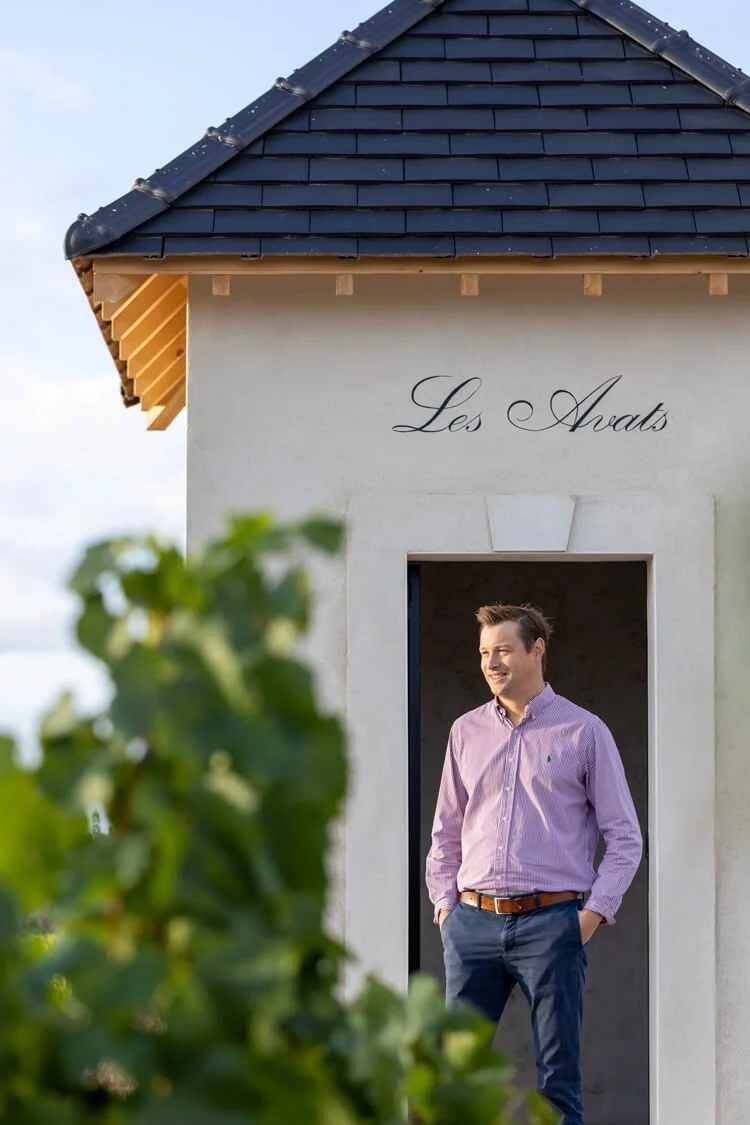
Guillaume Leté joined the family company as an intern in 2011 and in 2016 became its cellar master. He describes the three ranges of the Barons de Rothschild champagne, Invitation, Signature and Collection.
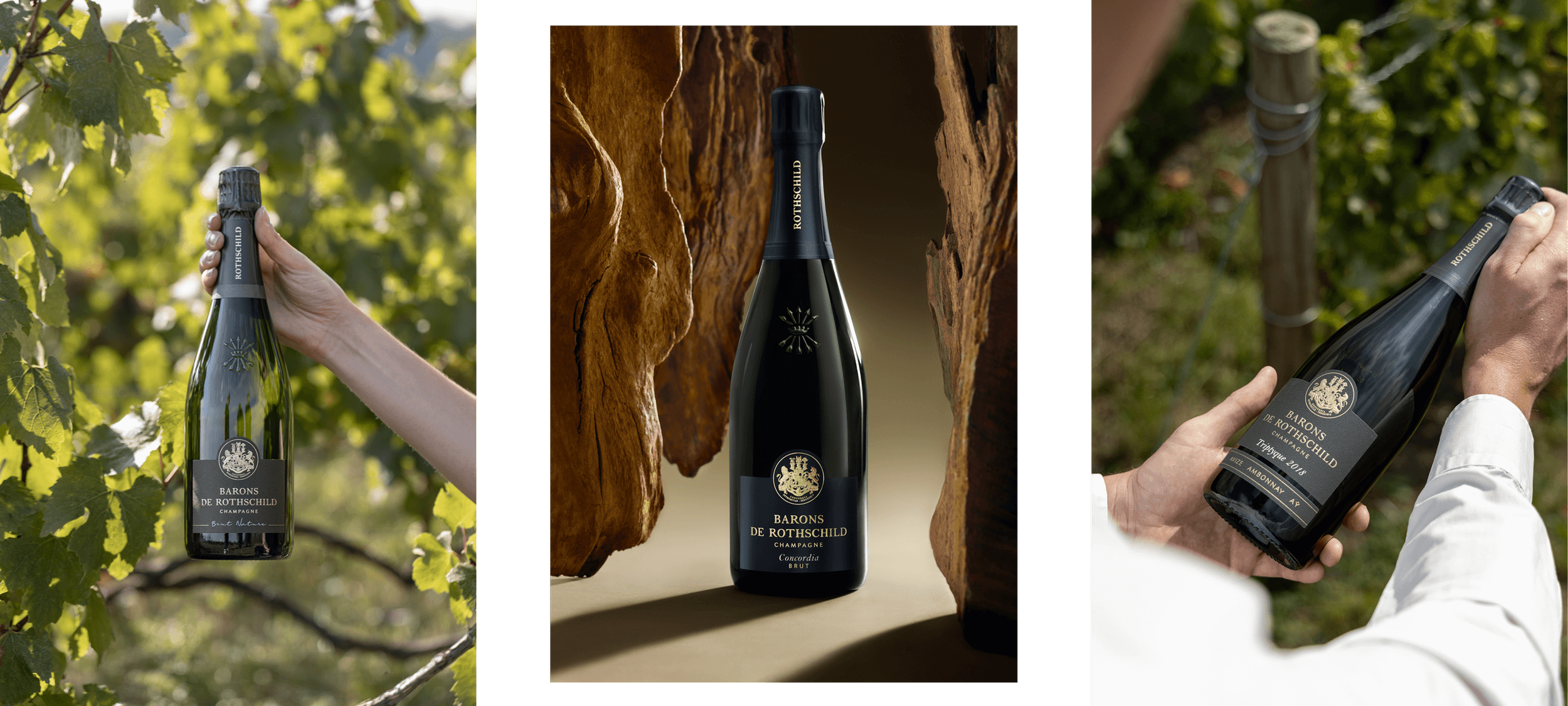
The Invitation range is based on a majority of Chardonnay, and includes Concordia Brut, 60% Chardonnay and 40% Pinot Noir with more than 40% reserve wines and 4 years of ageing, Brut Nature, the same blend but with zero dosage and Triptyque, whose first vintage was 2018, 50% Chardonnay and 50% Pinot Noir, sourced from 3 Grands crus Avize (Côte des Blans), Ambonnay and Ay (Montagne de Reims) and aged for 5 years.
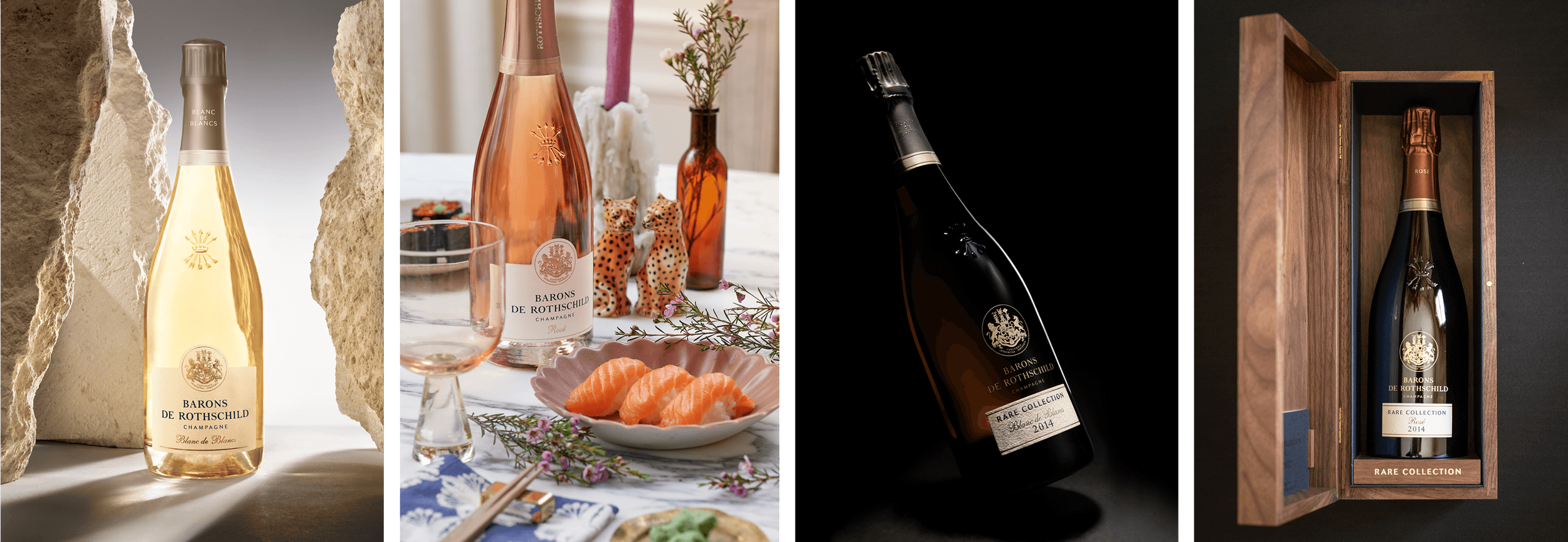
The Signature range is indeed the House’s signature cuvée, with the majority of the family’s favourite grape, chardonnay. The grapes are sourced 100% from Grands and Premiers crus. The Blanc de Blancs, is 100% Chardonnay, with 40% reserve wines, aged for a minimum of 4 years. The Rosé is 94% Chardonnay, with 6% red wine from Pinot Noir. The Collection range consists of their vintage wines, Rothschild Rare Collection Blanc de Blancs, 100% Chardonnay from 4 Grands crus from the Côte des Blancs, and Rothschild Rare Collection Rosé, which consists of 92% Chardonnay and 8% red wine of Pinot Noir.
Guillaume describes how the family focuses on Chardonnay for its elegance and purity: “The elevage of chardonnay needs slow maturation, it takes time to reveal itself” he states. Today they own 8 hectares but have 5 year contracts with 20 different families over 85 hectares, with 60 hectares making it to the bottling. The Chardonnay is sourced from the Côte des Blancs and the Pinot Noir from two sides of the Montagne de Reims, both north and south-facing. Ageing is very important to him, with a long period between harvest and bottling. He also discusses the Reserve wines, and how they approach the building up of the wines as a young House and their single plot approach.
Guillaume’s first job when he joined the company was to work on the Rosé, and the infusion of the red fruit using cold maceration and a very delicate extraction in stainless-steel tanks. “We don’t work on the structure of the Pinot Noir, just the fruity taste”, he says.
He is very excited about the two new facilities, which are both built with sustainability in mind. The Ogier production site was built in 2023 and the new facility at Vertus will be officially opened this summer and open to receive small groups by appointment. The Vertus facility was a challenge, as it was built in 1874, “easier to destroy, than rebuild,” he laughs as he discusses the renovation of the historic building. It will house gravity small tanks enabling more precision in the wine, “one plot, one press, one tank”. He emphasises their parcel-by-parcel approach as the key to quality.
Climate change is for every producer an issue, but flexibility and having a large team is essential to adapt to chaotic weather patterns. Today, Barons de Rothschild champagne is sold in 90 different countries, in the top restaurants, hotels and independent merchants. Guillaume’s wish for the next 20-years? “We’re just getting started…” his aim, simple, to make the best champagne.
RELATED POSTS

Keep up with our adventures in wine
Peter Sisseck, the man who helped change the image of Spanish wine, talks to Sarah Kemp.