
▻ Christian Moueix
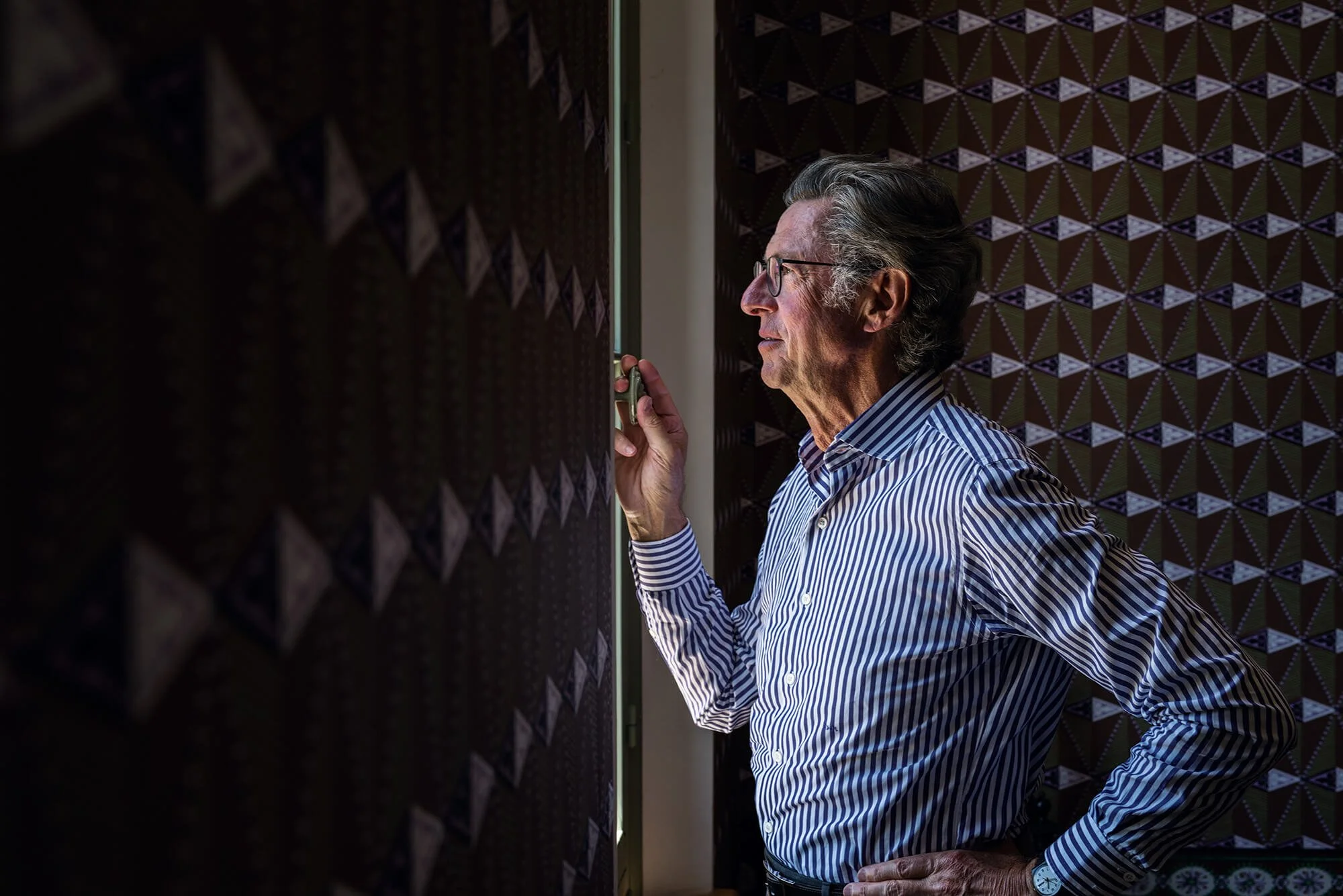
Sarah Kemp in conversation with Christian Moueix

Episode Summary:-
Christian Moueix is a name that needs little introduction to wine lovers. He is simply one of the wine world’s most respected wine producers, the man Hugh Johnson called “the reference point for Pomerol and the Right Bank.” In this episode of Great Wine Lives, he talks to Sarah Kemp at his Saint Emilion Château Bélair-Monange. Today he is President of Ets Jean-Pierre Moueix, and owner of some of the Right Bank’s most prestigious properties, Trotanoy, La Fleur-Pétrus, Hosanna and Latour in Pomerol, Bélair-Monange in Saint-Emilion, as well as Dominus and Ulysses Vineyard in California’s Napa Valley.
He discusses the influence of his father, who he describes as having the talent to see quality 20 years before other people, whether with vineyards, wine or art. He always wanted to follow his father; the only other profession he considered was law, as he was disturbed by injustice in the world. Today, with 55 vintages behind him, he has no regrets.
When he was 22 years old, he went to California and studied at UC Davis, where he had the opportunity to taste some of California’s wines from the 1940s and 1950s. He returned to Bordeaux to join his father, who put him in charge of the vineyards, including Petrus, where he made 38 vintages before his brother inherited the property.
Christian talks about how he arrived in June 1973 at Petrus and saw that there were a huge amount of clusters on the vines. He took the decision to drop half the crop, much to the concern of the vineyard workers and his neighbours--only Thierry Manoncourt of Château Figeac supported him. He was condemned by the priest in Saint Emilion for “wasting God’s harvest.” However, people gradually came to him to learn about green harvesting, including a young Corinne Mentzelopolous of Château Margaux. Drainage was another preoccupation of his, and which he led the way on exploring. He admits trying many things, including piloting a helicopter over the vineyard (which did not work out), but the digging of wells did.
He reflects on the Petrus years: “When I arrived at Petrus, it was not famous at all,” he says, and admits he does not miss the pressure, but was grateful to have the opportunity to look after one of the world’s top terroirs. He discusses the differences between Petrus and Trotanoy, stating that Trotanoy, with its 50% gravel and 50% clay soil, is more typical of Pomerol, whereas Petrus is unique.
La Fleur-Pétrus was a real challenge for him, and he describes how he set out to increase the size of the estate without decreasing its quality with the addition of Château Guillot. He believes that this move has made it possible for La Fleur-Pétrus to make much more complex and richer wine.
Over in Saint Emilion Château Bélair-Monange has just had a major new winery designed by Herzog and de Meuron. Christian tells how he bought Château Bélair in 2008 from Pascal Delbeck and combined it with Château Magdelaine, a Premier Grand Cru Classé which his father had bought in 1952. He is replanting part of the vineyard, and believes that in 10 to 15 years’ time it will be one of Saint Emilion’s greatest estates, as it has the best terroir.
In the early 80s Christian decided to buy the old Napanook vineyard in Yountville, California, and rename it Dominus. “It was a private project, because I didn’t want to risk my family’s reputation if I made a bad wine in California,” he says wryly. Memories of the great Napa wines of the ‘40s, ‘50s, and ‘60s inspired him; all were made without irrigation. Dominus is dry-farmed, one of the few wineries to do so in California. He believes that the wines of California are becoming too technical “How can you get the taste of the terroir if you are on one foot deep instead of ten foot deep.” Climate change is an issue in Napa, he notes: “We are in danger, no question.” (He declassified the entire 2022 vintage at Dominus, as the grapes were cooked.) He is experimenting, with UC Berkeley and UC Davis, with new techniques in the vineyard to alleviate the potential problems.
In 2008 he acquired the Ulysses Vineyard, situated along Napa Valley’s Oakville bench. He gives credit to Bob and Margrit Mondavi: “I’d not be in California without Bob and Margrit,” he says, as he reflects on their generosity and kindness.
Christian discusses the differences between farming in Bordeaux and California. He has not had success with Merlot in California, and there is none at Dominus or Ulysses. California Cabernet Sauvignon, he finds, “is a little more generous, rounder, richer, and a little more voluptuous,” but believes it doesn’t have the class of Bordeaux on the great terroirs. He is enthusiastic about Cabernet Franc in California, whereas in Bordeaux if it is cold, it can give green notes if not fully ripe.
One of his great loves is art, and in particular sculpture. He talks about his great partnership with the world-famous architects Herzog and de Meuron, who his wife Cherise found. Their first project with him was Dominus, they have become close friends and have been responsible for eight projects with him, including Bélair-Monange. When not in the vineyards, he enjoys horse racing, biking around Saint Emilion, reading poetry in summer at his house on the Dordogne, and listening to music in the winter.
Optimist or pessimist? “Realist,” he replies. The current situation in Bordeaux is terrible, he states, but he believes it will recover, because Bordeaux has the most refined wines in the world. And if he could wave a magic wand, his one wish? “Peace, and the creation of men without egos.”
Running Order:-
-
0.00 – 9.50
"My father was a very influential man with many talents--his ability to forsee quality twenty years before other people, whether with vineyards wine or art.”
– Christian’s relationship with his father and early years.
– Heading to UC Davis as a young man and discovering California.
– Joining his father to run the vineyards at the age of twenty-four. -
9.51 – 30.14
“When I arrived at Petrus, it was not famous at all.”
– How he developed green harvesting at Petrus.
– Christian’s development of drainage systems.
– The Petrus years.
– The terroirs of Trotanoy and La Fleur-Pétrus.
– Château Bélair-Monange – its history and future. -
30.15 – 54.41
“I’d not be in California without Bob and Margrit Mondavi.”
– Buying the Napanook Vineyard and creating Dominus.
– Christian’s belief in dry-farming.
– His thoughts on the future of Bordeaux and California.
– The difference between Bordeaux and California Bordeaux varieties.
– Christian’s love of art and his relationship with Herzog and de Meuron.
– Christian’s hobbies and his one wish.
RELATED POSTS


Keep up with our adventures in wine
Peter Sisseck, the man who helped change the image of Spanish wine, talks to Sarah Kemp.